From Forgotten to Reconnected: How Spending Habits Quietly Rebuilt an Old Friendship
We’ve all had those friendships that slowly fade—not with drama, but with silence. You once shared everything, and now you’re not even sure what they like for coffee. I felt that ache too—until a simple spending report from my banking app showed me something unexpected: my old friend had been buying concert tickets in our hometown. That small clue reignited a conversation we hadn’t had in years. What if the key to reconnecting wasn’t a grand gesture, but hidden in the everyday choices we make—and track—without even thinking? It sounds surprising, maybe even a little strange, but for me, technology didn’t just organize my money—it helped me rediscover a person I thought I’d lost touch with forever.
The Slow Fade of Meaningful Friendships
Remember that friend you used to call at midnight just to laugh about something silly? The one who knew your favorite tea order and the exact way you liked your blanket folded on the couch? I had someone like that—her name was Claire. We met in college, bonded over late-night study sessions and thrift-store shopping trips, and for years, we were each other’s constants. But life, as it does, got busy. She moved across the country for a job. I got married, then had my first child. Our calls went from weekly to monthly, then to occasional holiday texts. We still followed each other online, but liking a photo isn’t the same as really talking.
One rainy afternoon, I was scrolling through an old photo album on my phone—something I do when I’m feeling nostalgic or overwhelmed. There we were: Claire and me, wearing matching sunhats at a music festival, arms around each other, grinning like we had all the time in the world. I felt a lump in my throat. Not because I was sad, exactly—but because I missed her. Not just her presence, but the ease of it. The way we could pick up right where we left off, no explanations needed. And yet, I had no idea how to start. What do you say after years of silence? 'Hey, sorry I ghosted—how’s life?' It felt too heavy. Too late. So I closed the album and went back to folding laundry, carrying that quiet ache with me.
This kind of slow fade isn’t rare. In fact, it’s one of the most common ways friendships end—not with a fight, but with absence. We don’t unfriend each other. We don’t argue. We just… stop showing up. And the longer it goes on, the harder it feels to reach out. It’s like standing at the edge of a pond, wondering if the ripples you make now will even be noticed after so much stillness.
A Surprising Clue in My Monthly Spending Report
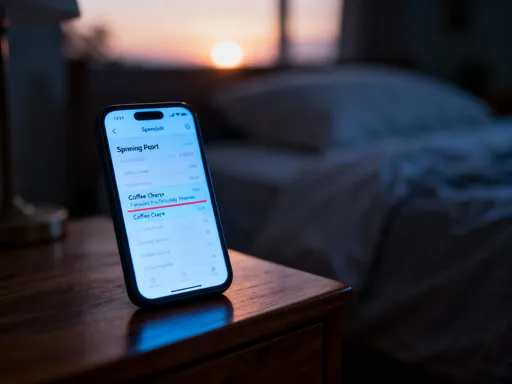
Then came the morning that changed everything. I was having my usual coffee, checking my banking app while the kids ate breakfast. I use a budgeting tool that categorizes my spending—groceries, utilities, entertainment—and sends me a monthly summary. That day, I noticed something odd: a $4.75 charge from a coffee shop in my hometown. I hadn’t been back in over two years. My first thought was fraud. But as I tapped to review the transaction, I realized it wasn’t on my personal card. It was linked to a shared travel account Claire and I had set up for a road trip we took five years ago. We’d never officially closed it, and somehow, her card was still connected.
My heart did a little skip. There it was—her name on the transaction history, tied to a place we both loved. That coffee shop wasn’t just any café. It was the one where we’d spent hours writing postcards to each other during finals week, promising we’d never let life get in the way. And now, here was proof she’d been there recently. I stared at the screen, not at the number, but at what it meant. She was back in town. She still went to our spot. Maybe, just maybe, she remembered it too.
So I did something small. I sent her a text: 'Saw a charge near our old latte haunt—still their number one customer?' No pressure. No heavy emotion. Just a light nudge, like tapping someone on the shoulder. I didn’t expect much. But within minutes, my phone buzzed. 'OMG, I was just thinking about you! I walked past it and couldn’t resist. How are you??' That message turned into a 15-minute text thread, which turned into a phone call, which lasted over two hours. We talked about everything—the kids, her job, my garden, her divorce, my mom’s health. It wasn’t perfect. It wasn’t like no time had passed. But it was real. And it was enough.
How Spending Data Tells Emotional Stories
That moment made me realize something: our spending habits are more than just financial records. They’re emotional footprints. Every purchase tells a story—sometimes a practical one, but often a personal one. That concert ticket? Maybe it’s not just entertainment. Maybe it’s someone trying to feel joy again after a hard year. That late-night food delivery? Could be exhaustion. Or loneliness. Or both. We don’t always share these feelings outright, but we leave traces of them in the way we spend.
I started paying attention—not in a nosy way, but with curiosity and care. I noticed a friend from my book club had started making weekly purchases at a local bookstore. Not e-books. Physical books. I remembered her saying once how much she missed the smell of paper and the weight of a real novel in her hands. So I sent her a message: 'Saw you’ve been treating yourself to some new reads—anything good lately?' She wrote back, 'I’ve been going through a rough patch, and books have been my safe place. Thank you for noticing.' That one sentence told me more than a dozen social media posts ever could.
Another time, I spotted a recurring charge for a yoga studio on a cousin’s shared family expense log (we use it for holiday planning). She’d never mentioned she was going back to yoga. I reached out: 'Yoga again? That’s amazing—how’s it feeling?' Her reply was simple: 'I needed to reconnect with myself. It’s helping more than I thought.' These weren’t deep confessions, but they were openings. And they came not from prying, but from paying attention to the quiet signals we all leave behind.
Turning Transactions into Talking Points
Once I saw how powerful these small observations could be, I started using them more intentionally—but always gently. The key, I learned, is to keep it light, warm, and focused on care, not curiosity. It’s not about tracking people. It’s about noticing them. For example, when I saw a friend had renewed her gym membership after a long pause, I didn’t say, 'Oh, you’re getting back in shape?' That could feel judgmental. Instead, I said, 'Saw your gym pass came through—how’s it feel to be back in the rhythm?' It acknowledged her effort without making assumptions.
Another friend made a sudden purchase from a home decor store—new throw pillows, a candle, some wall art. I knew she’d been living in the same apartment for years with the same furniture. So I messaged: 'Your space must be feeling so cozy now—love that you’re giving it some love!' She wrote back, 'I finally felt like I wanted to make it feel like home again. It’s been a long time since I cared about that.' That hit me. How many of us go through seasons where we stop tending to our spaces—and ourselves—because we’re just surviving? And how healing it can feel when someone notices we’re starting to thrive again?
These aren’t grand gestures. They’re micro-moments of attention. But over time, they build something real. They say, 'I see you. I remember you. I care.' And sometimes, that’s all it takes to break the silence.
Privacy with Purpose: Respecting Boundaries While Connecting
Now, I know what you might be thinking: 'Isn’t this a little invasive? Isn’t this like spying?' And I get that. If I found out someone was monitoring my spending to start a conversation, I’d be uneasy too—unless I trusted them. That’s why this only works when it’s based on shared context, not surveillance. I’m not digging through private accounts. I’m not asking for access to anyone’s finances. I’m only noticing what’s already visible through shared tools—group trip accounts, family budget logs, or apps we both use for planning.
The intention matters more than the method. If you’re looking at someone’s spending to judge them, to gossip, or to feel superior, that’s not connection—that’s intrusion. But if you’re doing it because you miss them, because you care, because you’re looking for a gentle way in, then it’s different. It’s like seeing someone wearing an old jacket you remember and saying, 'I love that you still have that—so many memories in those pockets.' It’s not about the jacket. It’s about the shared history.
I also make sure my messages are open-ended and kind. I never assume. I never pressure. I just offer a door. Sometimes they walk through. Sometimes they don’t. And that’s okay. The goal isn’t to force a friendship back to what it was. It’s to say, 'I’m here, if you want to talk.' That’s all.
Building a Habit of Thoughtful Reconnection
After my call with Claire, I didn’t stop. I started setting gentle reminders for myself. Not automated ones—those feel too robotic. But mental notes. 'If I see a book purchase from Sarah, send a message.' 'If Emma’s card shows a coffee shop near her mom’s place, ask how the visit went.' These tiny habits became part of my routine, like watering my plants or checking the weather. They took almost no time, but the returns were huge.
One of the most meaningful moments came when an old college roommate—someone I hadn’t spoken to in nearly a decade—renewed her museum membership. We used to go every Sunday, just to wander and talk. I sent her a simple note: 'Saw the museum charge—miss those slow Sundays with art and bad coffee.' She replied, 'I was just thinking about you last week. I went to our favorite exhibit. It wasn’t the same without you there.' We scheduled a video call that week. Then a visit. Now, we’re rebuilding our friendship, one small message at a time.
These reconnections didn’t happen overnight. Some messages got no reply. And that’s okay. Not every door opens. But enough of them did to remind me that most people aren’t ignoring us on purpose. They’re just waiting for someone to say, 'I see you. I remember us.' And sometimes, the nudge comes from the most unexpected place—a coffee charge, a book receipt, a gym fee.
Technology as a Quiet Ally in Human Connection
Looking back, I realize the app didn’t bring Claire back into my life. I did. The technology was just a mirror, reflecting something I already felt—the longing, the love, the hope that maybe she missed me too. It gave me permission to reach out, not with a dramatic 'We need to talk,' but with a simple, 'Hey, I noticed something.' And that made all the difference.
We often think of tech as something that pulls us apart—distracting us, isolating us, replacing real connection with likes and comments. And sometimes, it does. But it doesn’t have to. When used with intention, technology can help us be more present, not less. It can highlight the things we might otherwise miss. It can turn a number on a screen into a reason to say, 'I’ve been thinking about you.'
What started as a budgeting tool became a bridge. Not because it was designed for relationships, but because I chose to use it that way. I let it remind me of people I cared about. I let it show me their rhythms, their joys, their quiet struggles. And in doing so, I found my way back to conversations I thought were lost forever.
So if you’re sitting there, staring at an old photo, wondering how to reconnect with someone you miss—don’t wait for a perfect moment. You don’t need a grand plan. You don’t need to apologize for the silence. Just look for a small sign. A purchase. A shared memory. A familiar place. Let technology be your quiet ally. Let it give you the courage to say, 'I saw this and thought of you.' Because sometimes, the most human thing we can do is notice someone—and then let them know it.