From Distracted to Fully Present: How Our Dinner Table Became the Heart of Home Again
Remember when dinner used to feel like an event? Not just something we did, but a moment we looked forward to—where the house settled, the kitchen smelled like something comforting, and everyone, no matter how busy, made it to the table? I do. But somewhere between work emails, endless notifications, and the quiet habit of scrolling through our phones while eating, that warmth started to fade. We were all in the same room, but not really *together*. Conversations felt thin. Laughter came less easily. My daughter would answer in one-word replies, eyes still on her screen. My husband ate standing up, still in his work mindset. It wasn’t anyone’s fault—we were just caught in the current of modern life. Then one night, I looked around and realized: we weren’t sharing a meal. We were just sharing space. That moment changed everything. What followed wasn’t a tech overhaul for the sake of gadgets, but a quiet, thoughtful shift toward reclaiming connection. And it started right where we gathered—our dining table.
The Slow Disappearance of Real Connection at the Dinner Table
There was a time when the dinner table wasn’t just furniture—it was a ritual. My kids used to race home from school, eager to tell me about their day before they even took off their backpacks. We’d gather, plates in hand, and talk—really talk—about everything from the dog’s new trick to the science project that didn’t quite work. But slowly, that rhythm changed. The questions became shorter. The eye contact faded. Instead of stories, I’d get a shrug and “It was fine.” At first, I blamed the teenage years. Then I blamed my own exhaustion. But the truth was staring me in the face: we weren’t just tired. We were distracted. The table, once a place of warmth, had become a silent battlefield of competing attention. My son would eat one-handed, the other scrolling through messages. My daughter started bringing her tablet to the table “just to listen to music,” but we all knew she was watching videos. Even I caught myself checking work emails on my phone between bites. We were physically present, but emotionally, we were miles apart.
And we weren’t alone. So many of us are living this same quiet disconnect. The dinner table, once the heart of the home, has become a casualty of convenience and constant connection. The irony is painful—we have more ways to communicate than ever, yet fewer real conversations. We’re surrounded by smart devices, but we’ve forgotten how to be present. The noise isn’t just from the kitchen or the TV. It’s the mental clutter of unfinished tasks, the pressure to stay “on,” the habit of reaching for a screen the moment there’s a quiet pause. That pause used to be where connection lived. Now, it’s where we reach for our phones. I started to wonder: had we turned our most important daily ritual into just another item on the to-do list? And if so, was there a way to bring it back—not by banning technology, but by using it differently?
Discovering the Power of Environment: It’s Not Just About Food
One rainy afternoon, while cleaning out a closet, I found an old photo of our family from five years ago. There we were, all at the table, laughing over something my youngest had said. The lighting was warm, the table was full of mismatched dishes, and everyone was looking at each other. I stared at it for a long time. What had changed? Not just our routines—but the *feel* of the space. I realized we’d redecorated a few years back, and in our quest for a “modern” look, we’d installed bright, cool-toned LED lights and an open kitchen layout that carried every clatter and beep from the appliances. The room felt efficient, but not inviting. It didn’t feel like a place to linger.
That’s when it hit me: maybe the problem wasn’t just our habits. Maybe it was the environment itself. I started reading about how lighting, sound, and even furniture arrangement affect mood and behavior. Studies show that harsh, bright lighting can make people feel alert—but also stressed and less open to conversation. Constant background noise—like the hum of a fridge or the ping of a microwave—can keep our nervous systems on edge, making it harder to relax and connect. Cluttered spaces, even subtle ones, add to mental load. We don’t realize how much these things shape us until we step back and notice.
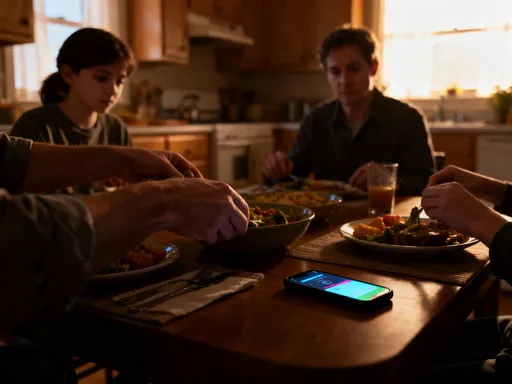
So I experimented. I dimmed the lights one evening and lit a few candles. I asked everyone to put their phones in a basket by the door—not as a rule, but as an invitation. And I turned off the kitchen fan that usually ran during cooking. The difference was subtle, but real. The room felt softer. Voices were quieter, but more intentional. My husband actually sat down. My daughter looked up and said, “This feels… nice.” That night, we talked for 20 minutes after eating—about nothing important, just silly things. But it mattered. I realized we didn’t need to fight technology. We needed to design a space that made presence feel natural, not forced. The table wasn’t broken. The atmosphere was.
Introducing the Quiet Revolution: Smart Tech That Serves, Not Commands
This is where technology surprised me—not by taking over, but by helping us reclaim our time. I didn’t want a futuristic dining room with holograms or voice-activated chairs. I wanted something gentle, almost invisible. Something that helped us *forget* the tech was even there. That’s when I discovered what I now call “quiet tech”—smart tools that don’t demand attention, but support it. The first thing I tried was smart lighting with adjustable color temperature. I programmed it to shift from bright, cool light during the day to a warm, amber glow in the evening, syncing with sunset. No buttons to press. No apps to open. It just happened. As dinner time approached, the room naturally softened, like the house was breathing out.
Next, I added a small smart speaker—not for music during meals, but for subtle cues. I set it to play a soft chime five minutes before dinner, a gentle signal that the transition was beginning. No one had to yell, “Dinner’s ready!” The sound became a shared rhythm. I also used it to play low-volume ambient soundscapes—gentle rain, distant birdsong—during meals on nights when the kitchen felt too loud. It wasn’t background music to ignore. It was a kind of sonic cushion, softening the edges of noise so conversation could flow more easily.
And then there was the table itself. I didn’t replace it, but I added a smart placemat—a thin, fabric-covered pad that vibrates gently when your phone receives a notification. It doesn’t show the message. It doesn’t buzz loudly. It just reminds you, quietly, that something’s waiting—without pulling your focus. I started leaving my phone in another room, but having that subtle alert helped me feel less anxious about missing something urgent. The tech wasn’t controlling us. It was helping us feel safe enough to let go. The goal wasn’t to eliminate technology, but to make space for something deeper: each other.
Building Rituals with Technology: Small Habits, Big Shifts
Here’s what I’ve learned: technology doesn’t change behavior. Rituals do. And the smartest tools are the ones that help build those rituals without fanfare. At first, I worried my family would resist any kind of “system.” But when the changes felt natural—when the lighting dimmed on its own, when the chime sounded like part of the evening rhythm—they didn’t feel like rules. They felt like part of the home’s heartbeat.
We started small. The five-minute chime became our signal to wrap up whatever we were doing. My son, who used to ignore dinner calls, began walking in on his own. “I heard the sound,” he’d say. “Figured it was time.” We added a second cue: when the lights shifted to warm mode, that was the official “phone-free zone” start. No arguments. No nagging. Just a shared understanding. I even programmed the speaker to say, in a calm voice, “Time to connect,” but only once—and only if everyone was seated. It felt a little silly at first, but my daughter laughed and said, “Okay, Mom, we get it.” And then she put her phone down.
The real shift came when these cues started triggering emotional responses. That chime? It wasn’t just a sound. It became a mental bookmark—a signal to close the laptop, take a breath, and leave the workday behind. The warm lighting? It became a visual cue that we were stepping into family time. These weren’t grand gestures. They were tiny, consistent moments that, over time, rewired our habits. And the best part? They didn’t feel imposed. They felt like gifts—small, daily invitations to be present. I realized that technology, when used with intention, doesn’t have to steal our attention. It can help us give it—more freely, more fully.
When Kids and Grandparents Embrace the Change
One of my biggest worries was whether everyone would feel included. My mom visits often, and she’s not exactly tech-savvy. I didn’t want her to feel overwhelmed or left out. But when she came for dinner one evening and the lights gently warmed as she sat down, she smiled and said, “This feels so much more relaxing.” I showed her how to use a simple remote to adjust the brightness if she wanted—no app, no setup. She loved that she could make it feel just right for her eyes. For her, it wasn’t about the tech. It was about comfort. And that made all the difference.
My kids surprised me too. I expected resistance, especially from my teenager. But when I let her choose the dinner soundscape one night—she picked forest sounds with distant crickets—she got excited. “This is so cool,” she said. “It’s like we’re eating outside.” She started looking forward to “her” night. Even my youngest, who used to fidget through meals, now sits longer because the space feels calmer, less overstimulating. We even added a small digital photo frame that cycles through family pictures during dinner—no sound, just warm memories on the wall. It sparks conversations I never expected: “Remember when we went to the lake?” “That was the day Grandma fell in the mud!” Laughter returns. Stories come back.
What I didn’t expect was how this would strengthen intergenerational bonds. My mom and my daughter now collaborate on choosing the weekly soundscape. My son teaches my dad how to use the voice assistant to dim the lights. These aren’t just tech moments—they’re connection moments. The tools aren’t replacing human interaction. They’re creating space for more of it. And that’s the real win: when technology helps everyone feel seen, heard, and at home.
The Ripple Effect: How One Room Transformed Our Whole Home Life
What started at the dinner table didn’t stay there. I began to notice changes in how we moved through the house. Conversations that used to end at the table now continued in the living room. My husband started putting his work clothes away before dinner—something he never did before. My kids began planning weekend activities together instead of retreating to their rooms. The shift wasn’t dramatic. It was quiet, like water finding its level.
But the impact was real. I sleep better now, knowing I’ve had real time with my family. My stress levels have dropped. I feel more grounded. And I’m not imagining it—research shows that regular, distraction-free family meals are linked to lower anxiety, better emotional regulation, and stronger family cohesion. What we’ve built isn’t just a smarter dining room. It’s a healthier home.
The table became a model for how we want to live. We started applying the same principles elsewhere: softer lighting in the living room, designated tech-free zones, gentle audio cues for bedtime. The idea that environment shapes behavior became our guiding light. We’re not perfect. There are still nights when someone forgets to put their phone away, or when work spills over. But now, we notice. And when we do, we adjust. We’ve created a home that doesn’t just house us—it supports us. And it all started with the simple act of coming back to the table.
Starting Your Own Smart Dining Journey: Simple Steps, Real Results
You don’t need a full renovation or a big budget to begin. In fact, the best place to start is with one small change. Pick one thing that could make your dining space feel more welcoming. Maybe it’s replacing a harsh overhead light with a smart bulb that can warm up in the evening. Or setting a daily chime on your phone or speaker to signal dinner time. You could create a “phone basket” by the table—no rules, just an invitation to disconnect.
Think about sound. Is the kitchen too loud during meals? Try playing a low-volume ambient track—rain, ocean waves, or soft instrumental music. Or invest in simple sound-dampening panels if noise is a constant distraction. Even a thick rug or heavy curtains can help absorb sound and make the space feel cozier.
Most importantly, involve your family. Ask your kids what kind of mood they’d like at dinner. Let your partner help choose the lighting. Make it a shared project, not a top-down change. And be patient. Habits take time. Some nights will feel more connected than others. That’s okay. The goal isn’t perfection. It’s presence.
Remember, this isn’t about rejecting technology. It’s about using it with purpose—so it serves your life, not controls it. The dinner table doesn’t have to be a battleground of distraction. It can be a sanctuary of connection. It can be where you laugh, listen, and remember what matters. It can be, once again, the heart of your home. And sometimes, all it takes is a little light, a soft sound, and the courage to be together—truly together—in the quiet glow of an evening meal.