What I Learned About Risk in Fund Management – No Fluff, Just Real Talk
Managing money isn’t just about chasing returns—it’s about knowing what could go wrong before it happens. I’ve been burned before, overconfident in a “sure thing” that turned south overnight. That’s when I realized: real fund management starts with seeing risks others ignore. This is not theory—it’s what I’ve tested, messed up, and finally got right. Let me walk you through how to spot trouble early, protect your portfolio, and stay calm when markets get wild. This isn’t about complex models or Wall Street jargon. It’s about practical, hard-earned insights that any investor can apply—especially those managing household savings, planning for family goals, or protecting hard-earned wealth from unseen threats. Because in the end, lasting financial security comes not from high returns alone, but from avoiding catastrophic mistakes.
The Wake-Up Call: When My Portfolio Blew Up
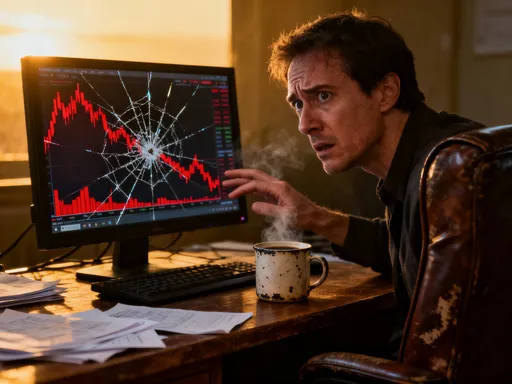
It started with confidence—too much of it. I had built what I believed was a solid, well-diversified portfolio. There were index funds, bond ETFs, some international exposure, and a few actively managed funds with strong five-year track records. I told myself I was playing it smart, not chasing hot stocks or speculative trends. Everything felt stable—until it wasn’t. In early 2020, as global markets reacted to unexpected economic shocks, my so-called balanced portfolio dropped nearly 28% in just six weeks. That number stung, but what hurt more was the realization: I had misunderstood the nature of risk entirely.
I had assumed that because my assets were spread across different categories, I was protected. I trusted past performance and fund ratings without digging deeper. I didn’t ask whether my bond funds held lower-quality debt or if my international funds were concentrated in just a few economies. When volatility hit, everything moved in the same direction—down. The diversification I counted on evaporated. What I thought was caution turned out to be complacency. I wasn’t managing risk; I was ignoring it.
The emotional toll was real. Watching numbers shrink while feeling powerless is a unique kind of stress, especially when that money represents years of saving, future education plans, or retirement goals. I began questioning every decision, every fund choice, every assumption. But out of that discomfort came clarity: protecting capital must come before pursuing gains. If you lose 30%, you need more than a 40% return just to break even. That math changed my perspective forever. Risk isn’t an abstract concept—it’s the difference between financial stability and long-term setbacks.
That experience forced me to stop focusing solely on returns and start asking harder questions. What could go wrong with each investment? Under what conditions would I lose money fast? Who’s really managing the fund, and how do they handle stress? I realized that fund management isn’t about predicting the future—it’s about preparing for multiple possible futures, especially the unpleasant ones. The wake-up call wasn’t just about a market dip; it was about recognizing that risk identification is not optional. It’s the foundation of responsible investing, especially for those who can’t afford to start over.
Risk Isn’t Just Volatility—It’s Hidden in Plain Sight
Most investors think of risk as market swings—the daily ups and downs shown on performance charts. But volatility is only the surface layer. The deeper, more dangerous risks are often invisible until it’s too late. I learned this the hard way when I held a fund labeled “low volatility” that still lost significant value during a broad correction. The label wasn’t wrong, but it was incomplete. What wasn’t advertised was the fund’s high exposure to a single sector and its use of derivatives to smooth returns—a strategy that backfired when market conditions shifted.
True risk lives in the structure of an investment: how concentrated it is, how leveraged it might be, and how easily it can be sold when needed. For example, I once invested in a real estate fund that promised steady income and moderate growth. On paper, it looked stable. But I didn’t realize that a large portion of its holdings were in commercial properties in secondary cities—assets that become illiquid quickly during downturns. When the market slowed, redemptions were suspended, and I couldn’t access my money for months. That wasn’t volatility; that was structural risk, hidden behind a polished presentation.
Traditional risk metrics like beta or the Sharpe ratio are useful, but they have limits. Beta measures sensitivity to market movements, but it’s based on historical data and assumes normal conditions. During a crisis, correlations shift, and assets that normally behave differently can collapse together. The Sharpe ratio evaluates return per unit of risk, but it treats all volatility the same—whether it’s upward or downward. It doesn’t capture tail risks, liquidity crunches, or the possibility of permanent loss. Relying on these tools alone is like driving with a GPS that only shows traffic patterns from last year.
To see real risk, you have to look beyond the numbers. Read the fund’s prospectus. Understand its mandate. Ask whether it uses leverage or complex instruments like swaps and futures. Check the top holdings—how concentrated are they? Is the fund truly diversified, or is it spread across similar types of assets that respond the same way to economic stress? I now treat every fund as a story with potential plot twists. I ask: What assumptions is this strategy built on? What happens if those assumptions break? This shift—from passive acceptance to active investigation—has made me a more cautious, and ultimately more effective, investor.
The Silent Killer: Liquidity Risk No One Talks About
Liquidity risk is the quiet threat that few investors consider—until they need cash and can’t get it. I didn’t think about it until I tried to exit a mid-tier bond fund during a period of market stress. I expected to receive my money within a few days, as usual. Instead, I received a notice: redemptions were being processed more slowly due to limited market buyers. It took over three weeks to access my funds. For someone managing household finances, that delay wasn’t just inconvenient—it was alarming.
The problem wasn’t the fund’s performance. It was the nature of its holdings. Many bond funds, especially those investing in corporate or municipal debt, hold securities that aren’t traded daily. In calm markets, the fund can meet redemptions by selling a few bonds or using cash buffers. But when multiple investors pull out at once, and buyers disappear, the fund manager has no choice but to slow down payouts. Some funds even impose redemption fees or gates during volatile periods. This isn’t a flaw—it’s a feature of how these funds operate. But it’s rarely highlighted in marketing materials.
Open-end mutual funds create an illusion of constant liquidity. You see a net asset value updated daily and assume you can exit anytime. But that value is based on pricing models, not real-time transactions. If the underlying assets can’t be sold quickly without losses, the fund’s ability to deliver cash is compromised. I now evaluate liquidity by asking three questions: How frequently are the fund’s holdings traded? Does the fund have a history of redemption delays during stress? And what does the prospectus say about liquidity management tools like swing pricing or gates?
One practical step I take is to match investment liquidity with my time horizon. For money I might need within two to three years—such as for home repairs, family travel, or unexpected medical costs—I stick to highly liquid options like money market funds or short-term Treasuries. For longer-term goals, I can accept less liquidity, but only if I fully understand the trade-off. I also keep a cash buffer outside the portfolio to avoid being forced into a sale during a downturn. Liquidity risk doesn’t make headlines like market crashes, but it can be just as damaging when you’re counting on access to your money.
Diversification Done Wrong: Why My “Balanced” Portfolio Wasn’t Balanced
I used to believe that if I owned stocks, bonds, real estate, and international assets, I was diversified. But in 2020, I watched all those pieces fall together like dominoes. My U.S. equity funds dropped. My bond funds lost value as rates shifted. My international funds suffered from global slowdowns. Even my real estate investment trust (REIT) fund declined. I had diversification in name, but not in function. The truth is, diversification fails when assets are correlated—meaning they respond similarly to the same economic shocks.
Correlation risk is the hidden flaw in many so-called balanced portfolios. During normal times, different asset classes may move independently. But in a crisis, fear drives investors to sell everything perceived as risky. Stocks fall. Corporate bonds fall. Even some alternatives like private equity or hedge funds can suffer if they’re exposed to the same macroeconomic forces. I had assumed my mix was safe because it looked varied. But I didn’t test how it would hold up under stress. When inflation fears rose and interest rates fluctuated, nearly everything in my portfolio was sensitive to those same factors.
I also made the mistake of rebalancing too infrequently. I set my allocations and left them for years, assuming the original balance would hold. But markets move. Equities outperformed for a stretch, so they grew to represent a much larger share of my portfolio than intended. When the correction came, I was overexposed to riskier assets. Rebalancing isn’t just about maintaining percentages—it’s about risk control. Selling high and buying low forces discipline and prevents complacency.
Now, I build diversification with intention. I look for assets that respond differently to economic conditions—for example, Treasury bonds, which often rise when stocks fall, or inflation-protected securities that perform well when prices surge. I also consider non-correlated strategies, like market-neutral funds or managed futures, though I use them sparingly and only after thorough research. Most importantly, I stress-test my portfolio annually. I simulate scenarios: What if interest rates jump? What if unemployment rises? How would each holding react? This isn’t about predicting the future—it’s about preparing for resilience. True diversification isn’t about how many funds you own, but how well your portfolio holds up when everything goes wrong.
How I Started Mapping Risk, Not Just Returns
After my losses, I stopped evaluating funds based on past performance alone. Instead, I developed a risk-mapping framework—a systematic way to identify and prioritize potential threats before investing. It starts with the fund’s mandate: What is it legally allowed to do? Can it use leverage? Invest in derivatives? Hold illiquid assets? These details, buried in the prospectus, reveal far more about risk than a three-year return chart.
I now assess each fund across four dimensions: concentration, leverage, liquidity, and transparency. Concentration risk means too much exposure to one asset, sector, or geography. I check the top ten holdings and ask whether any single position could drag down the whole fund. Leverage magnifies both gains and losses. A fund that borrows to boost returns may look strong in good times but collapse under pressure. I avoid funds with high leverage unless I fully understand the strategy and accept the added risk.
Liquidity, as I’ve learned, is critical. I review how the fund prices its holdings and whether it has tools to manage redemptions in stress periods. Transparency matters just as much. I look for fund managers who provide clear, detailed reporting—not just glossy summaries. Do they explain their decisions? Do they admit mistakes? A manager who communicates openly is more likely to act responsibly when markets turn.
I also use scenario analysis to test potential outcomes. I ask: What would happen to this fund if unemployment spiked? If inflation doubled? If a major economy entered recession? I don’t need exact answers—just a sense of vulnerability. For example, a fund heavy in consumer discretionary stocks would likely suffer in a downturn, while one focused on essential goods might hold up better. This exercise helps me weigh risks objectively and avoid emotional attachment to any single investment. Mapping risk doesn’t eliminate uncertainty, but it turns the unknown into something manageable.
The Human Factor: Emotions, Biases, and Blind Spots
No discussion of risk is complete without addressing the investor’s own mind. I was my own worst enemy when I lost money. I suffered from confirmation bias—seeking information that supported my belief in a fund while ignoring warning signs. I fell for recency bias, assuming that recent good performance would continue. And I trusted authority bias, placing too much faith in fund managers with impressive titles and track records, without questioning their strategies.
Fund marketing plays into these tendencies. Brochures highlight strong returns, skilled managers, and sophisticated models. They use phrases like “prudent risk management” without defining what that means. Past performance is displayed prominently, even though regulators require the disclaimer that it’s not indicative of future results. We read those words but don’t truly believe them—especially when returns have been good for years.
To combat these biases, I now use a checklist before any investment. It includes questions like: Have I read the full prospectus? Do I understand the sources of return? What could go wrong? I also consult with a trusted friend who has a different financial perspective. A simple conversation can reveal blind spots I didn’t see. Most importantly, I wait. I don’t make decisions under pressure or excitement. I let ideas sit for a few days. If I still feel comfortable after that time, I proceed—but only then.
Emotional discipline is the hardest part of risk management. It’s easy to feel confident when markets rise. The real test comes when fear spreads and losses mount. I’ve learned to separate my identity from my portfolio. A bad quarter doesn’t mean I’m a bad investor. It means I’m operating in an uncertain world. Staying calm, sticking to my process, and avoiding panic sales have saved me from deeper losses. Risk identification starts with self-awareness—knowing your own tendencies and building systems to counter them.
Building a Smarter Fund Management Routine
Today, my approach to fund management is systematic and ongoing. I don’t set it and forget it. I review my portfolio quarterly, not to chase performance, but to check for risk drift. Have allocations shifted? Have any funds changed strategy? Are there new red flags in their reports? I track early indicators like rising correlation between holdings, increasing leverage, or declining liquidity in key assets.
I read fund reports differently now. Instead of skimming the manager’s letter, I go straight to the footnotes, holdings, and risk disclosures. I look for changes in strategy, turnover rates, or shifts in sector exposure. I pay attention to how managers explain poor performance—do they take responsibility, or make excuses? This level of engagement has made me a more informed investor and helped me avoid funds that no longer fit my risk tolerance.
I’ve also set red-line triggers—clear rules for when to act. For example, if a fund loses 15% in a quarter without a clear market-wide reason, I investigate immediately. If a manager changes strategy without notice, I reconsider my position. These rules remove emotion from decision-making and ensure I respond quickly to real problems. At the same time, I avoid overreaction. Not every dip is a crisis. I distinguish between temporary volatility and structural risk by asking whether the fund’s core strategy is still sound.
This routine hasn’t made me rich overnight. But it has protected my capital, reduced stress, and given me confidence in my choices. I no longer expect to beat the market every year. My goal is to preserve wealth, avoid catastrophic losses, and stay on track for long-term goals. That requires vigilance, but not obsession. The balance is delicate—staying alert without becoming paralyzed by fear. With the right habits, risk management becomes not a burden, but a source of strength.
Risk identification isn’t a one-time fix—it’s a mindset. In fund management, the real edge isn’t picking winners, but avoiding landmines others don’t see. What I’ve learned the hard way is that protecting capital comes first. With the right habits, tools, and awareness, you don’t need perfect predictions—just better preparation. That’s how lasting wealth is built: not on luck, but on foresight.