How I Turned Old Treasures Into Smart Investments—My Antique Collection Strategy
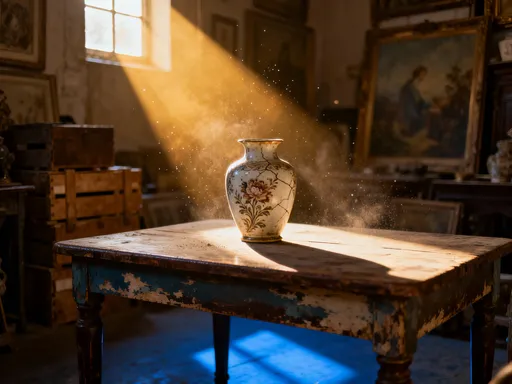
What if your grandmother’s dusty vase isn’t just a relic—but a quiet wealth builder? I never thought antiques could be more than clutter until I dug into their financial potential. This isn’t about hoarding old stuff; it’s about spotting value where others see junk. In this piece, I’ll walk you through how collecting antiques can become a strategic financial move—balancing passion with profit, while managing risks smartly. With the right approach, what sits in your attic today could fund your retirement tomorrow. This is not a get-rich-quick story. It’s about patience, knowledge, and the slow but steady growth of tangible assets that outlive market crashes and inflation spikes.
The Hidden Value in Antiques: More Than Just Nostalgia
Antique collecting is often dismissed as a sentimental pastime, something reserved for elderly relatives and dusty estate sales. Yet beneath the surface of this seemingly nostalgic pursuit lies a powerful, often overlooked financial opportunity. Unlike stocks or bonds, antiques are physical assets—objects you can touch, display, and pass down. Their value is not tied to quarterly earnings or interest rates, but to a blend of history, craftsmanship, and cultural demand. When these elements align, the financial returns can be substantial. A Chippendale chair, a Victorian silver tea set, or a mid-century ceramic vase may appear to be mere decor, but in the right market, they can appreciate at rates that rival traditional investments.
What transforms an old object into a valuable antique? Four key factors determine long-term worth: rarity, provenance, condition, and demand. Rarity refers to how few of a particular item were made or how few have survived over time. A limited production run from a renowned artisan or a historically significant piece from a short-lived era increases scarcity, which in turn drives value. Provenance—the documented history of ownership—adds credibility and depth. An antique once owned by a notable figure or displayed in a respected collection carries added weight in the eyes of serious buyers. Condition is equally critical. Even a rare item loses much of its value if it is cracked, refinished, or improperly restored. Original parts, intact finishes, and minimal wear are highly prized.
Demand, the final piece of the puzzle, is shaped by shifting tastes, economic trends, and cultural moments. For example, mid-century modern furniture saw a surge in popularity in the 2010s, pushing prices for authentic Eames and Saarinen pieces into the tens of thousands. Similarly, vintage watches from the 1960s and 1970s have gained favor among younger collectors, turning once-overlooked timepieces into sought-after assets. The interplay of these four factors—rarity, provenance, condition, and demand—creates the foundation for appreciation. Collectors who understand this equation are not merely acquiring objects; they are investing in stories with financial potential.
Why Antiques Belong in a Diversified Portfolio
Financial advisors consistently emphasize diversification: spreading investments across different asset classes to reduce risk. Most people think of stocks, bonds, and real estate—but few consider antiques as part of this equation. Yet, alternative assets like fine art, vintage wine, and collectible furniture have long been used by high-net-worth individuals to hedge against market volatility. Antiques, in particular, offer a unique advantage: their value often moves independently of traditional financial markets. When stock prices plummet during a recession, antiques may hold steady—or even rise—as investors seek tangible, enduring assets.
Consider the 2008 financial crisis. While stock markets crashed and real estate values collapsed, certain categories of antiques maintained or increased their value. A well-preserved 18th-century grandfather clock or a rare porcelain figurine from Meissen did not react to credit default swaps or housing bubbles. Their worth was determined by collectors, not Wall Street. This decoupling from mainstream markets makes antiques a valuable buffer during economic uncertainty. In periods of high inflation, tangible assets often perform well because their intrinsic value is not eroded by currency devaluation. A silver tea set from 1890 carries both material worth and historical significance, making it more resilient than paper assets when confidence in financial systems wavers.
Moreover, antiques introduce a human element to investing that other assets lack. While a stock certificate is an abstract representation of ownership, an antique is a physical embodiment of culture and craftsmanship. This emotional connection can enhance long-term commitment to holding the asset, reducing the temptation to sell during short-term market dips. At the same time, the lack of correlation with equities means that adding antiques to a portfolio can lower overall volatility. A balanced mix of liquid investments and tangible collectibles creates a more robust financial strategy. For the thoughtful investor, antiques are not a replacement for traditional assets, but a complement—one that adds stability, diversity, and a touch of personal meaning.
Spotting Gems in a Sea of Junk: The Art of Selection
Not every old item is an antique, and not every antique is worth owning. The ability to distinguish between mass-produced reproductions and genuine, high-potential pieces is the cornerstone of successful collecting. This skill does not come overnight. It requires study, observation, and, often, a few costly mistakes. One collector I spoke with once purchased what she believed to be a 19th-century French armoire for $800 at a rural auction. It had intricate carvings and an aged finish—everything that suggested authenticity. Only after consulting a furniture expert did she learn it was a 1980s reproduction made in Southeast Asia. The piece, while attractive, held no investment value. That experience taught her a hard lesson: appearances can be deceiving.
So how does one begin to develop an eye for quality? Start with craftsmanship. Genuine antiques often exhibit hand-cut joinery, dovetailing, and tool marks that machines cannot replicate. Examine the back, underside, and interior of a piece—areas that forgers may neglect. Authentic furniture from the 1800s will show slight inconsistencies, reflecting the handwork of the period. Look for original hardware, such as brass knobs or iron hinges, which can help date a piece. Marks and signatures are also vital. A maker’s stamp, label, or signature on a porcelain item, painting, or silverware can confirm authenticity and provenance. However, even these can be faked, so verification through expert appraisal or reference books is essential.
Historical context matters too. Understanding the design movements of different eras—Victorian, Art Deco, Federal, Arts and Crafts—helps identify period-appropriate styles. A piece that claims to be 18th-century but features materials or techniques not available until the 20th century is likely a reproduction. Equally important is recognizing regional variations. A Pennsylvania Dutch cupboard differs from a New England pine chest, and knowing these distinctions adds depth to your knowledge. The most successful collectors are not just buyers; they are students of history, design, and material science. They spend time in museums, read auction catalogs, and attend lectures. They build relationships with curators, appraisers, and experienced dealers. This ongoing education transforms casual interest into informed decision-making, turning random purchases into strategic acquisitions.
Where and How to Buy: Markets, Auctions, and Private Sales
The location and method of purchase can significantly impact both the price and authenticity of an antique. There is no single best place to buy—each venue offers distinct advantages and risks. Estate sales, for example, are often rich sources of overlooked treasures. When a family downsizes or settles an inheritance, valuable items may be priced low due to lack of expertise. A careful buyer with knowledge can acquire high-quality pieces at a fraction of retail value. However, competition has increased, and many estate sales now attract professional dealers who arrive early and snap up the best items. Timing and preparation are crucial—researching the family history or home contents in advance can reveal hidden opportunities.
Auction houses, both local and international, provide another important channel. Reputable firms like Sotheby’s or Christie’s offer rigorous authentication and detailed provenance research, giving buyers confidence in what they are purchasing. However, these benefits come at a cost. Buyers pay a premium, often 15–25% above the hammer price, and competition among bidders can drive prices well beyond market value. For the individual collector, regional auction houses may offer better value. They often feature consignments from local estates and have lower buyer’s premiums. Online auctions have also grown in popularity, offering access to global markets from home. Yet, buying sight-unseen carries risk. Photographs can hide damage, and descriptions may be incomplete. A cautious approach includes requesting additional photos, condition reports, and, when possible, in-person inspections.
Flea markets and antique fairs remain popular, especially for beginners. These venues offer a wide variety of items at negotiable prices. Bargains can be found, but so can fakes. Vendors vary in knowledge and honesty, making due diligence essential. Always inspect items closely, ask questions, and avoid impulse buys. Negotiation is expected, and polite haggling can result in significant savings. Private sales, often arranged through word of mouth or collector networks, can yield exceptional finds. A trusted seller may offer a piece at a fair price, knowing the buyer will appreciate it. However, these transactions lack the safeguards of formal auctions, so independent appraisal is wise. Ultimately, the best buying strategy combines multiple channels, patience, and a clear understanding of your goals.
Preserving Value: Storage, Insurance, and Maintenance
An antique’s value is not fixed at the moment of purchase—it can grow or shrink based on how it is cared for. Neglect, improper handling, and environmental damage are among the greatest threats to an item’s worth. A single incident—such as a cracked porcelain plate or a water-stained painting—can erase decades of appreciation. Preservation is not just about sentimental care; it is a financial responsibility. Proper storage, climate control, and insurance are not optional extras but essential components of a sound investment strategy.
Environmental conditions play a critical role. Wood furniture can warp in high humidity or crack in dry heat. Textiles fade under direct sunlight. Silver tarnishes when exposed to air. The ideal storage environment maintains stable temperature and humidity levels—typically between 68–72°F and 45–55% relative humidity. Basements and attics, though commonly used, are often too damp or too hot. Climate-controlled storage units or dedicated display rooms are far safer. For delicate items like clocks, musical instruments, or paper-based collectibles, even minor fluctuations can cause irreversible damage.
Insurance is another non-negotiable. Standard homeowner’s policies often provide limited coverage for collectibles and may exclude high-value items altogether. A separate rider or a specialized fine art and collectibles policy ensures full replacement value in case of theft, fire, or accident. These policies typically require documentation, such as appraisals, photographs, and provenance records, reinforcing the need for careful record-keeping. Maintenance should be handled with equal care. Cleaning an antique improperly—using harsh chemicals or abrasive tools—can destroy its surface and reduce its value. When in doubt, consult a conservator. Professional restoration, while costly, can preserve or even enhance worth when done correctly. The goal is not to make an item look new, but to stabilize it and honor its original condition.
Knowing When to Sell: Timing and Exit Strategies
Collecting is deeply personal, but financial reality demands that every asset have an exit strategy. Unlike stocks, which can be sold instantly with a few clicks, antiques are illiquid. Finding the right buyer at the right price can take months or even years. Knowing when and how to sell is as important as knowing what to buy. The decision should be guided by market conditions, personal financial needs, and realistic expectations—not emotion. Holding onto a piece out of sentiment can delay profitable opportunities or result in missed peaks.
Market timing matters. Certain categories of antiques go in and out of fashion. For example, mid-century modern furniture peaked in value around 2015–2018, but prices have softened as supply increased and tastes shifted. Selling during a period of high demand maximizes return. Monitoring auction results, dealer prices, and collector forums helps identify trends. Pricing strategy is also key. Setting a price too high deters buyers; pricing too low leaves money on the table. A fair market value, supported by recent comparable sales, is the best starting point. The choice of sales venue—private sale, auction, or online platform—should match the item’s value and rarity. High-end pieces often perform best at auction, where global exposure attracts serious bidders. More common items may sell faster through online marketplaces.
Tax implications must also be considered. In many countries, profits from the sale of collectibles are subject to capital gains tax, sometimes at a higher rate than stocks. Keeping detailed records of purchase price, appraisal dates, and restoration costs helps determine the correct tax liability. For some, donating an antique to a museum or nonprofit may offer both financial and personal rewards, including a tax deduction. Ultimately, selling should be viewed not as an end, but as a transition—a way to realize value and reinvest in new opportunities. The most successful collectors treat their collections as dynamic portfolios, not static displays.
Risk Realities: Illiquidity, Forgeries, and Market Shifts
Antique investing is not without risks, and ignoring them can lead to financial loss. The most significant challenge is illiquidity. Unlike a mutual fund or savings account, antiques cannot be converted to cash quickly. A piece may sit in storage for years before the right buyer appears. This lack of liquidity means antiques should never be relied upon for emergency funds or short-term financial goals. They are best suited for long-term wealth building, where patience is rewarded.
Forgeries and misattributions are another serious concern. The antique market has long been plagued by reproductions, altered items, and outright fakes. Some are crude, but others are sophisticated enough to fool experts. A porcelain vase may be “enhanced” with an older base, or a painting may be given a false signature to increase its appeal. Provenance research and third-party authentication are critical defenses. Reputable appraisers, scientific testing (such as carbon dating or pigment analysis), and documentation trails help verify authenticity. Buyers should also be wary of deals that seem too good to be true—unusually low prices for rare items often indicate problems.
Market shifts pose a third risk. Tastes change, and what is valuable today may not be tomorrow. The popularity of certain designers, styles, or periods can fade, reducing demand and prices. Economic downturns can also affect the luxury goods market, where antiques often reside. During times of financial stress, collectors may downsize or sell, increasing supply and driving prices down. These realities underscore the importance of diversification within the antique category itself. Relying on a single type of collectible—such as only Victorian furniture or only Japanese prints—increases exposure to trend risk. A balanced collection across eras, regions, and materials offers greater stability. Awareness, research, and caution are the best tools for navigating these challenges.
Passion Meets Prudence
Antique collecting, when approached with financial discipline, can be more than a pastime—it can be a meaningful part of wealth building. But success does not come from luck; it comes from skill, research, and patience. The most rewarding collections are those where passion and prudence walk hand in hand. Each piece tells a story, but behind every acquisition should be a thoughtful decision grounded in value, authenticity, and long-term strategy. The true return on investment is not just measured in dollars, but in the wisdom gained and the legacy created. For those willing to learn, the world of antiques offers not just beauty, but lasting financial potential.