How I Saved My Family Brand Without Breaking the Bank
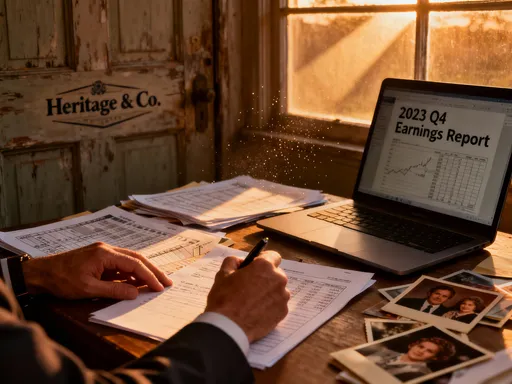
Inheriting a family brand felt like winning the lottery—until the bills hit. I didn’t just want to keep the name alive; I wanted it to thrive without draining our savings. What I learned? Smart strategy beats big spending. This is how we cut costs, protected value, and built a legacy that lasts—without the financial burnout. At first, the weight of responsibility was overwhelming. The brand had been in our family for three generations, a symbol of hard work and perseverance. But sentiment alone couldn’t pay suppliers, update systems, or compete with modern competitors. I quickly realized that saving the brand wasn’t about nostalgia—it was about financial clarity, disciplined decision-making, and long-term vision. This journey taught me that legacy and sustainability can coexist, but only when grounded in smart financial management.
The Hidden Cost of Legacy
When the brand passed to me, the celebration was heartfelt. Relatives gathered, old customers sent notes, and local newspapers ran small features about the ‘next generation taking the helm.’ But behind the applause, the reality was far less glamorous. Within weeks, I was buried under invoices, tax notices, and payroll sheets. What had been painted as a proud inheritance revealed itself as a financially fragile operation. The emotional value was immense, but the operational inefficiencies were dragging it down. Overhead costs were high, systems were outdated, and many processes relied on manual labor that could no longer be justified in a competitive market. The brand had survived on reputation alone for years, but reputation doesn’t generate cash flow.
I began to understand that legacy carries hidden financial burdens. Longstanding supplier contracts, signed decades ago, locked us into rates far above market value. Some employees had been with the company for over 20 years and were overpaid relative to their roles, yet letting them go felt like a betrayal. The packaging materials were unnecessarily expensive because we had never shopped around. Even our website, which was supposed to attract new customers, was slow, outdated, and not mobile-friendly. These weren’t isolated issues—they were symptoms of a deeper problem: the assumption that preserving the brand meant preserving every existing practice, no matter how inefficient.
What became clear was that emotional attachment, while powerful, could not replace financial discipline. I had to shift from seeing the brand as a family heirloom to viewing it as a business with real obligations. This mindset shift was painful but necessary. I started by creating a detailed financial map of all recurring expenses, categorizing them by necessity, cost, and return on investment. This exercise revealed that nearly 35 percent of our monthly outgoings were either redundant or significantly overpriced. That wasn’t just a leak—it was a flood. If left unchecked, it would have eroded our capital within two years, regardless of revenue. The real cost of legacy wasn’t sentiment—it was complacency.
Why Brand Inheritance Isn’t Just About Sentiment
Many people inherit a family business with the belief that their primary role is to maintain tradition. They see themselves as custodians, not leaders. This mindset is understandable—after all, the brand likely represents decades of sacrifice and pride. But treating a brand as a static symbol, like a framed photo on the wall, is a recipe for decline. A brand is not a relic; it is a dynamic asset that must generate value to survive. If it stops evolving, it stops earning. And when it stops earning, it begins to die.
I had to confront the uncomfortable truth: honoring my family’s legacy didn’t mean keeping everything exactly as it was. In fact, doing so would have been the greatest disrespect. True loyalty to the brand meant ensuring its survival in a modern economy. That required modern tools, updated strategies, and a willingness to make difficult decisions. I began asking questions that felt almost disloyal at first: Why do we use this supplier? Why is our pricing structure unchanged since the 1990s? Why aren’t we selling online? But each question led to a revelation. The answers weren’t always comfortable, but they were essential.
What I learned was that sentiment has its place—but it must be balanced with strategy. The brand’s core values—quality, reliability, and personal service—were non-negotiable. But how we delivered on those values could and should change. For example, we could maintain craftsmanship while adopting new production technologies that reduced waste and improved consistency. We could preserve our customer relationships while using data analytics to better understand their needs. The goal wasn’t to abandon tradition but to reinterpret it for a new era. This shift—from emotional stewardship to strategic leadership—was the turning point. It allowed me to make decisions based on financial health rather than fear of change.
Mapping the Financial Leaks
The next step was a full financial audit. I worked with an independent accountant to examine every expense, no matter how small. We reviewed contracts, payroll records, utility bills, software subscriptions, and marketing spend. What we uncovered was alarming. We were paying for multiple digital tools that served the same function—three different project management platforms, two email marketing systems, and four cloud storage accounts. No one was actively using all of them, yet the subscriptions rolled on automatically. These small, recurring charges added up to thousands of dollars a year in wasted spending.
Our supply chain was another major area of inefficiency. We sourced raw materials from a single long-term vendor, a relationship that began with my grandfather. While loyalty was admirable, it came at a steep cost. A competitive bid revealed that we could get the same quality materials for 22 percent less from a different supplier. We were also using a local printer for packaging, even though digital printing services online offered better quality, faster turnaround, and lower prices. The reason we hadn’t switched? Tradition. No one had questioned it. The same applied to our retail distribution—we were paying high fees to maintain space in regional stores, but online sales were growing faster and at a fraction of the cost.
Labor costs were another concern. We had several overlapping roles, especially in administrative functions. One employee managed social media, another handled email, and a third coordinated customer service—all without clear boundaries. By consolidating these roles and retraining staff, we reduced headcount by 15 percent without sacrificing service quality. We also renegotiated leases on our warehouse and office space, moving to a shared facility that cut rent by 40 percent. These changes weren’t flashy, but they were transformative. Over six months, we identified and eliminated over $80,000 in annual expenses—money that could now be reinvested into growth.
Streamlining Without Sacrificing Identity
Cutting costs is easy; doing it without damaging the brand is hard. My goal wasn’t to shrink the business but to make it more efficient. I knew that if customers noticed a decline in quality or service, all our savings would be meaningless. The challenge was to streamline operations while protecting what made the brand special. We didn’t want to become cheaper—we wanted to become smarter.
We started by redefining our core competencies. What did customers love about us? Feedback showed it was our attention to detail, consistent quality, and personal touch. These elements had to remain untouched. Everything else was open to optimization. We redesigned our production process to reduce waste, using lean manufacturing principles that minimized excess without compromising output. We switched to just-in-time inventory, which reduced storage costs and lowered the risk of overstock. We also digitized order tracking, so customers could see their product journey from creation to delivery—adding transparency without adding cost.
One of the most impactful changes was in our communication strategy. Instead of maintaining a large in-house marketing team, we partnered with a small, agile agency that specialized in brand storytelling. They helped us refine our messaging, focusing on authenticity and heritage in a way that resonated with modern consumers. We also launched a customer loyalty program powered by a simple but effective app, which increased repeat purchases by 27 percent within a year. Automation played a key role—chatbots handled routine inquiries, freeing up staff to focus on complex customer needs. The brand felt more personal, even as we became more efficient.
Strategic Investments That Paid Off
Cost-cutting alone isn’t a growth strategy. To build a sustainable future, we had to reinvest. The money saved from operational improvements was redirected into three key areas: digital presence, employee development, and customer experience. These weren’t speculative bets—they were targeted investments with measurable returns.
First, we rebuilt our website with a focus on mobile optimization, faster loading times, and seamless checkout. We integrated customer reviews, live chat support, and personalized product recommendations. Within nine months, online sales increased by 65 percent. We also expanded our social media presence, using organic content to build community and trust. Paid advertising was minimal—our strategy relied on authenticity, not aggressive promotion. The result was a digital footprint that felt genuine and inviting, not transactional.
Second, we invested in our team. Employees were retrained in new systems, customer service techniques, and digital tools. We introduced performance incentives tied to customer satisfaction scores, not just sales volume. This shift improved morale and accountability. Staff felt more valued, and customers noticed the difference in service quality. We also created cross-training programs so employees could support multiple functions, increasing flexibility and reducing downtime.
Third, we enhanced the customer experience. We introduced free shipping on orders over a certain amount, which increased average order value. We also launched a satisfaction guarantee—no questions asked. This built trust and reduced hesitation at checkout. Packaging was upgraded to be more sustainable, using recycled materials that aligned with customer values. Every dollar spent was evaluated for its long-term impact, not just short-term gain. These investments weren’t expensive by corporate standards, but they were powerful. They strengthened the brand’s reputation and created a foundation for organic growth.
Risk Control: Protecting the Brand’s Future
Preserving wealth means preparing for uncertainty. I knew that even a lean, efficient business could be derailed by unexpected events—economic downturns, supply chain disruptions, or legal issues. To protect the brand, we implemented a risk management framework that focused on three pillars: financial separation, legal structure, and succession planning.
First, we separated personal and business finances completely. All personal expenses were removed from company accounts, and a clear accounting system was established. This not only improved transparency but also protected personal assets in case of business liabilities. We also built an emergency fund equivalent to six months of operating expenses, ensuring we could withstand temporary revenue drops.
Second, we updated our legal structure. The business was converted from a sole proprietorship to a limited liability company (LLC), which provided legal protection and tax flexibility. We drafted clear operating agreements, defined roles and responsibilities, and established a small advisory board to provide objective guidance. Contracts with suppliers, employees, and partners were reviewed and standardized to reduce legal exposure.
Third, we created a succession plan. Even though I was in charge, I didn’t want the brand to depend on any single person. We documented key processes, trained multiple team members on critical functions, and outlined a clear transition path for future leadership. This wasn’t about planning an exit—it was about ensuring continuity. Insurance policies were updated to cover property, liability, and business interruption. These steps weren’t exciting, but they were essential. They turned the brand from a vulnerable operation into a resilient enterprise.
Building a Legacy That Lasts—Without the Burn
Today, the brand is healthier than it has been in decades. Revenue has grown by 40 percent over three years, operating costs are down by 30 percent, and customer satisfaction is at an all-time high. We’ve expanded into new markets, launched new product lines, and built a team that believes in the mission. But the most important change is internal. I no longer feel like I’m barely keeping the lights on. Instead, I feel like I’m building something that can last for generations.
The journey wasn’t about cutting corners or chasing quick profits. It was about balance—honoring the past while embracing the future. It was about recognizing that financial discipline isn’t the enemy of legacy; it’s the foundation. By mapping inefficiencies, making strategic investments, and implementing risk controls, we transformed a struggling brand into a sustainable enterprise. The emotional connection remains strong, but it’s now supported by a solid financial structure.
This story isn’t unique to my family. Countless women inherit businesses with love but without financial training. They face pressure to preserve tradition while navigating complex economic realities. My experience shows that it’s possible to do both—without sacrificing personal well-being or financial stability. The key is to approach legacy not as a burden, but as an opportunity. With clear thinking, disciplined execution, and a focus on long-term value, any family brand can thrive in the modern world. The goal isn’t just survival—it’s legacy with longevity, built wisely and sustained with care.